
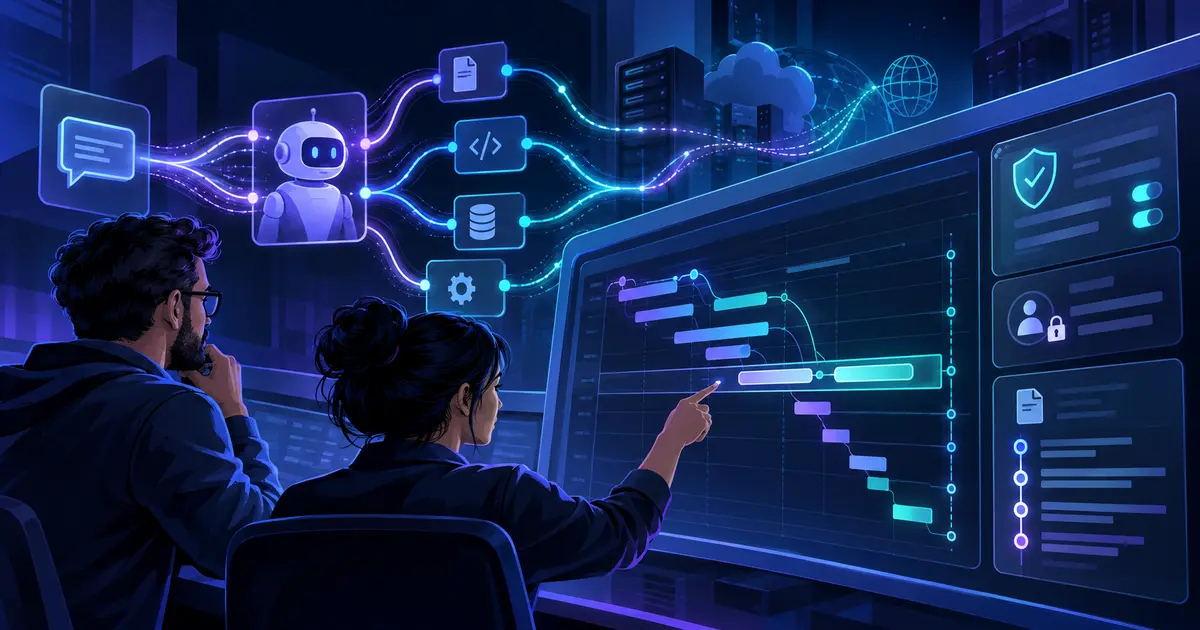
Roll out Claude Platform OpenTelemetry traces with privacy-safe content modes, delivery checks, incident triage and an independent audit record.
What changed and why it matters now
Anthropic announced OpenTelemetry trace export for Claude Managed Agents, the Messages API and Claude SDKs on October 14, 2026. Managed Agents and Messages API users add a destination in the Claude Console; SDK users configure tracing in their application. Anthropic says traces use OpenTelemetry GenAI semantic conventions and can flow to compatible OTLP tools.
The capability is in public beta. Anthropic lists integrations including Grafana, Honeycomb, Sentry, Splunk, Datadog, Langfuse and other observability platforms, but compatibility, cost and field coverage depend on the destination. Grafana’s implementation guide confirms that Messages API traces can show token usage, cost and evaluations without application-code changes after an administrator configures the destination.
The primary release is thirteen days old, beyond the preferred seven-day window but within the allowed thirty-day context. Current attention was validated by an October 26 Futurum analysis and fresh implementation documentation returned in Firecrawl search on October 27. That signal does not prove traffic, rankings or production reliability.
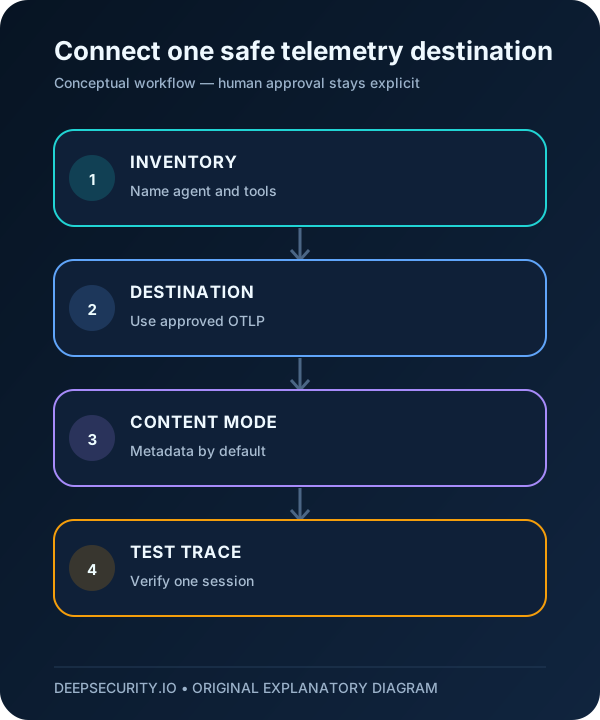
1. Inventory the workflow before exporting anything
List the agent, model calls, tools, MCP servers, downstream services, data classes and owners. Identify the questions an operator must answer: which step failed, what data crossed a boundary, whether a tool call succeeded and who approved the action.
Choose a low-risk test workflow with synthetic or non-sensitive content. Document the Claude surface in use—Managed Agents, Messages API or an SDK—because the available spans and who controls the runtime differ. Name the observability destination, region, access group, retention period and incident owner.
Do not enable full-content export to discover what it contains. Review Anthropic’s current span reference and the destination’s ingestion behavior first, then decide which fields are permitted.
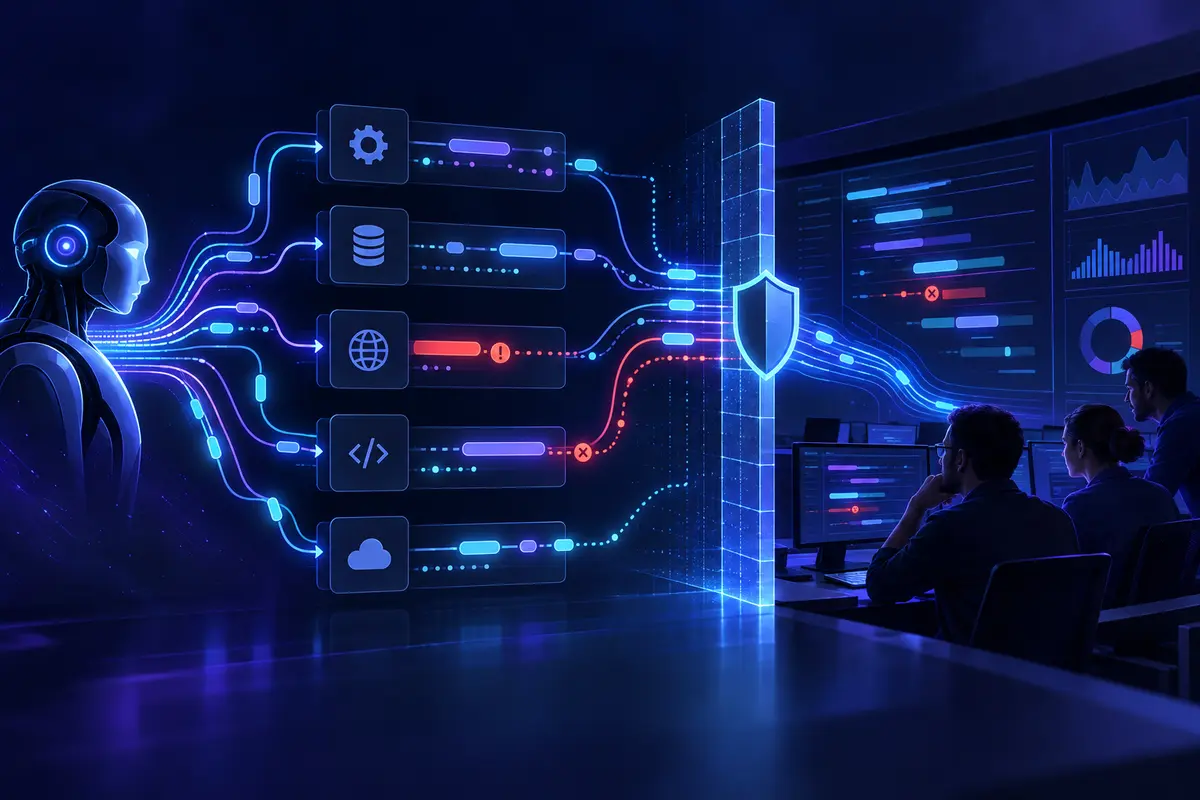
- Map tool calls and data classes before adding the destination.
- Use separate test and production telemetry credentials.
- Confirm that trace access is narrower than general dashboard access.
2. Start with metadata-only and justify any content increase
Anthropic documents metadata-only as the default and full-content as the mode that adds prompts and responses. Grafana’s guide similarly says metadata-only sends token counts and timing without content. Start there, then prove that a specific debugging or evaluation need requires more.
Full content can create a second sensitive-data store containing prompts, responses and tool material. Before enabling it, apply data classification, access controls, retention, deletion, regional processing and incident-response requirements to the observability platform. Redact or avoid secrets and regulated data at the application boundary.
Futurum reports that HIPAA, FERPA or K-12 restrictions can force metadata-only for traces exported from Anthropic’s servers. Verify the current contract and documentation for your account; do not assume a content-mode toggle overrides regulatory or organizational restrictions.

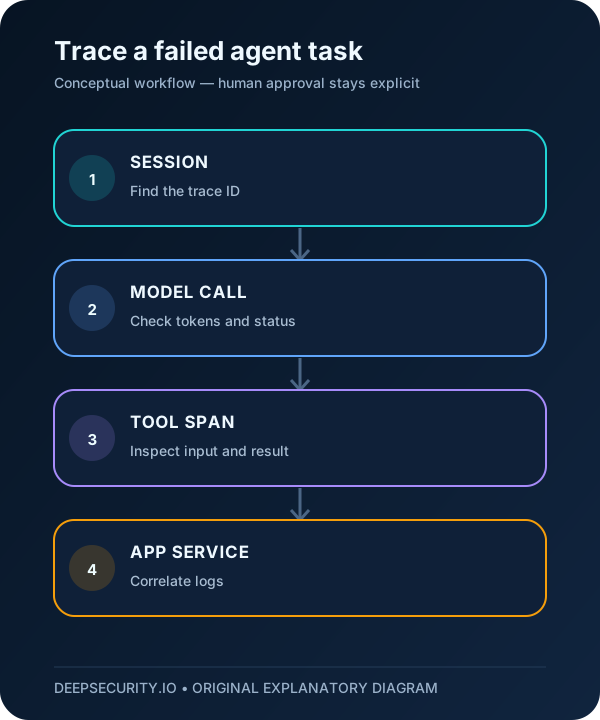
3. Trace one failed task end to end
Trigger a controlled failure, such as a tool timeout or denied API request. Capture the application request ID and W3C trace context. Grafana notes that reusing the same sampled traceparent header groups multi-turn Messages API requests into one conversation.
Follow the session through the model call, tool span and downstream application service. Compare latency, status, token counts and identifiers with application logs. Confirm whether the failure originated in model output, tool authorization, network behavior, application logic or the telemetry pipeline itself.
Example runbook prompt: ‘Using only this sanitized trace export and linked application logs, build a step timeline. Cite trace and span IDs. Separate observed failures from inferred causes, list missing spans, and propose the next reversible diagnostic. Do not claim user impact or root cause without matching application evidence.’
4. Keep audit evidence independent of best-effort traces
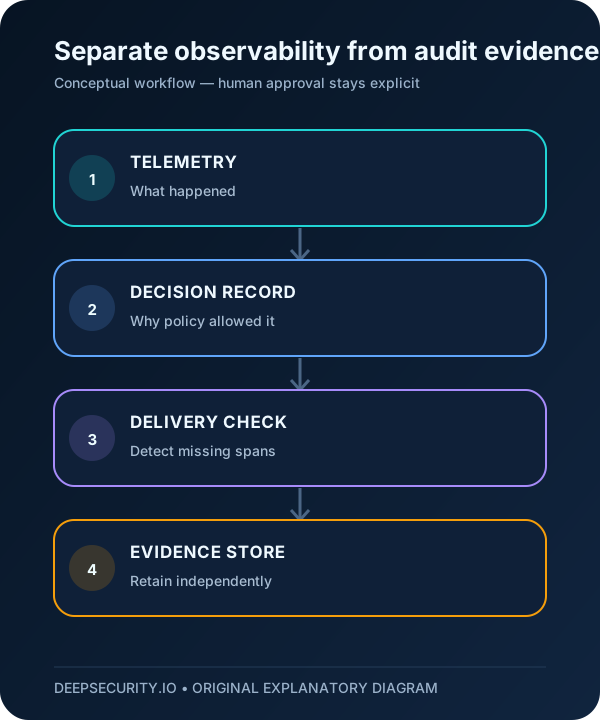
Futurum’s analysis highlights two limitations: Managed Agents spans may omit the model’s reasoning, and Anthropic documents API delivery as best effort, so a span can be lost. A trace can support an investigation without proving the complete decision history.
Store the business decision record separately: requested action, policy and version, evidence used, authorization decision, human approval when required, resulting change and durable identifiers. Monitor the telemetry pipeline itself for expected-versus-received spans and destination failures.
Treat model reasoning text as debugging context, not proof of why a decision was correct. The application’s policy evaluation, authorization result and source evidence are the auditable facts. This is especially important when the hosted runtime controls which fields exist.
5. Roll out by permission, not by dashboard enthusiasm
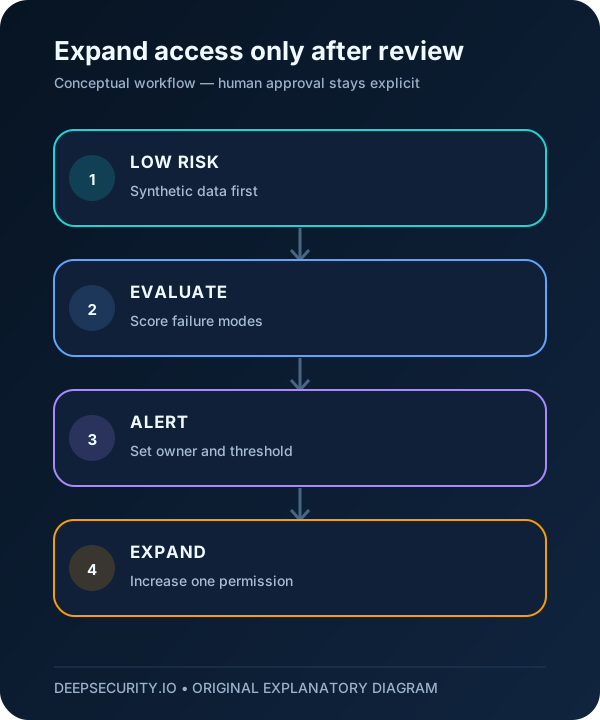
Define baseline traces and alerts for tool errors, latency, token spikes, repeated denials and unexpected destination changes. Run evaluations on known failure cases and confirm operators can locate the correct source evidence. Measure trace completeness and triage time rather than treating dashboard presence as success.
Expand one permission or one workflow at a time after the evidence and incident path work. Set stop conditions for missing spans, sensitive content exposure, unexplained tool activity, broken correlation or uncontrolled observability cost.
DeepSecurity.io did not operate Anthropic’s beta or benchmark a destination. Availability and semantics can change during beta. The expected deliverable is a tested trace pipeline, privacy decision, independent audit record and rollback plan—not a claim that telemetry makes an agent trustworthy.
Put the insight into practice.
Deep Security helps organizations assess risk, validate controls, and build a practical plan to strengthen their defenses.
Talk with Deep Security