
A practical pilot guide for Anthropic's public-beta misuse monitoring with customer-controlled storage, SIEM routing and human-reviewed safety cases.
What changed and who can use it
Anthropic announced on November 23 that Enterprise Frontier Safeguards, or EFS, is opening in public beta for eligible business customers. The company says EFS detects sophisticated misuse patterns across multiple requests while remaining compatible with zero data retention. SecurityWeek independently covered the beta on November 24, creating a current attention signal beyond the vendor announcement.
Anthropic says the beta works through the Claude Platform, Claude Platform on AWS, Amazon Bedrock and Claude on Google Cloud, with Microsoft Foundry support planned. Eligible customers are notified with setup instructions. The reviewed public page does not publish a universal plan matrix or separate EFS subscription price; customers pay normal cloud storage, request, key-operation and applicable transfer charges. Confirm eligibility and commercial terms directly before planning a rollout.

Understand the claimed data path before configuring it
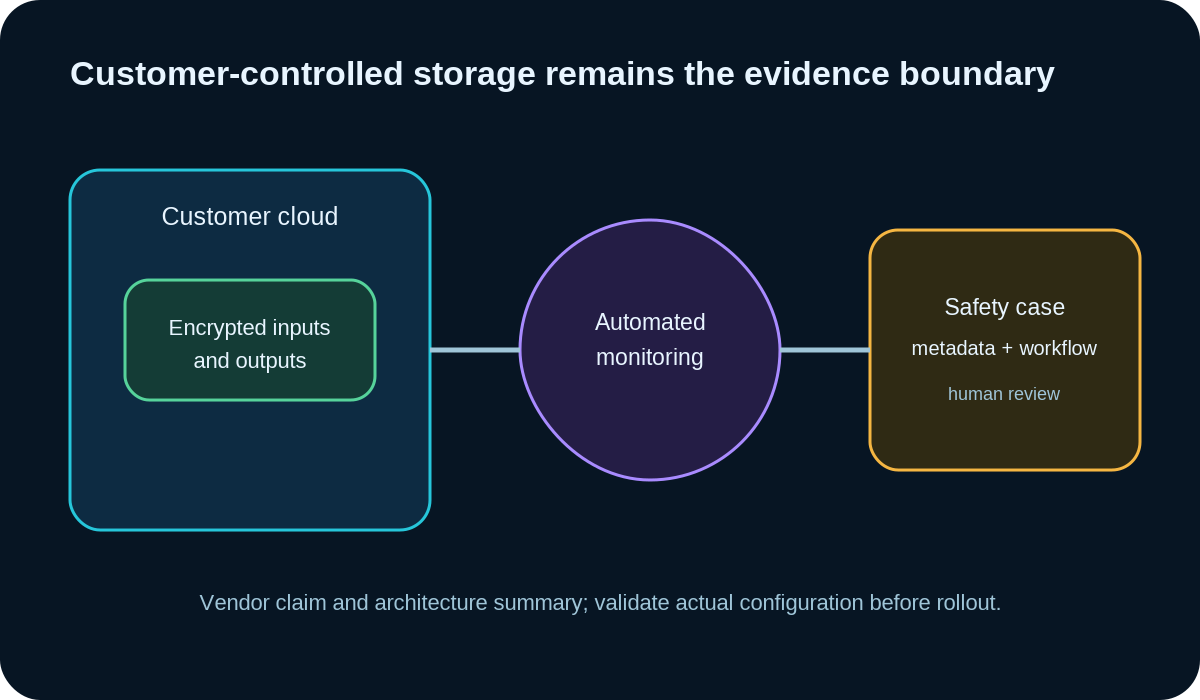
Anthropic says customers bring storage such as Amazon S3 or Google Cloud Storage in their own account. Inputs and outputs are written to that storage and then promptly deleted from the delivery path. Automated monitoring reads safety data from the customer's cloud, while Anthropic receives safety correspondence and monitoring metadata rather than prompt or response content. For Bedrock and Google-managed Claude, the company says the flow remains within that cloud boundary.
Those are vendor claims and architecture descriptions, not a verification of your tenant. Security, privacy, platform and legal owners should inspect the actual service agreement, region, bucket or object permissions, customer-managed key options, logging, retention, deletion behavior and support access before accepting the boundary.
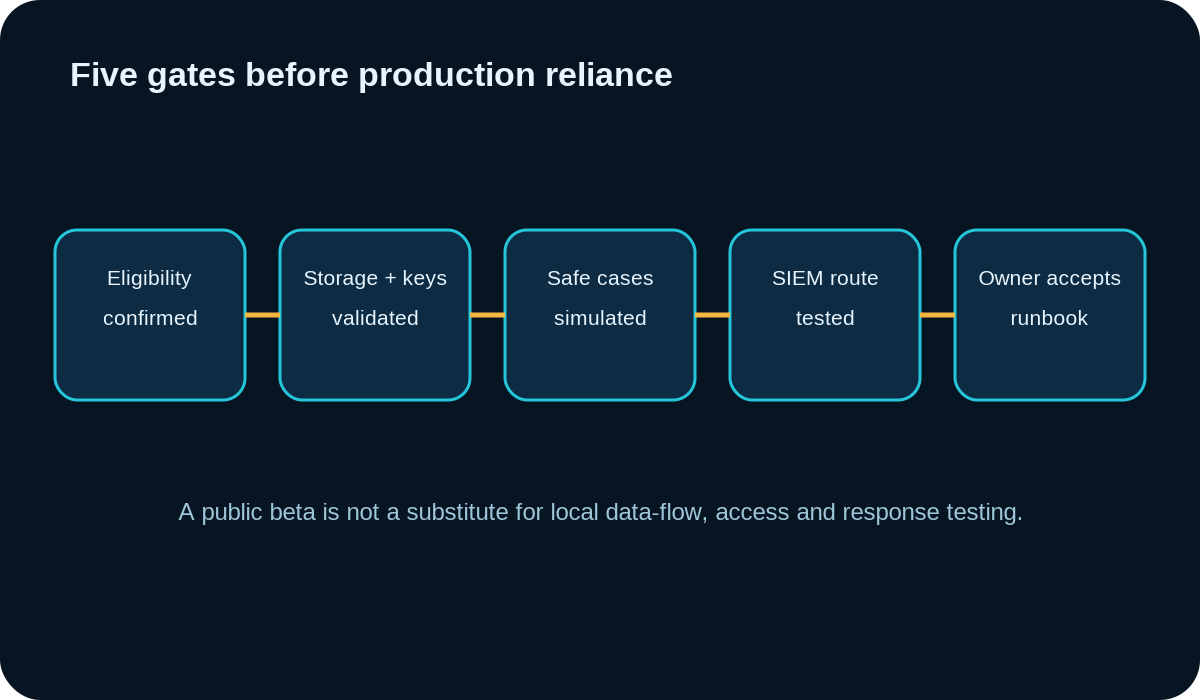
Step 1: define a bounded misuse-monitoring pilot
Choose one approved application with synthetic or otherwise authorized test data and a named security owner. Document the model endpoint, cloud account, storage region, encryption owner, access roles, retention rule, SIEM destination, case severity mapping, reviewer group and stop condition. Do not begin with customer, regulated or production-secret content.
Use safe, policy-approved test cases that exercise expected case creation without asking the model to perform harmful actions. The goal is to validate plumbing and review behavior, not to prove that the system detects every misuse pattern.
Step 2: test the safety-case workflow end to end
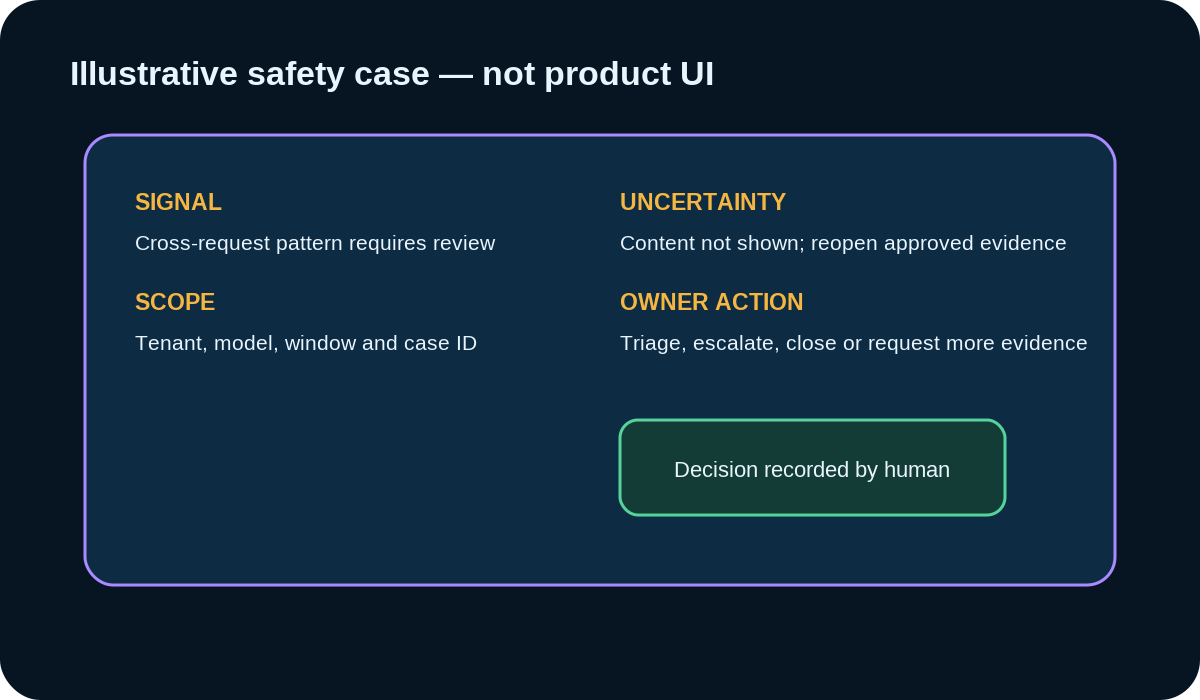
Anthropic says an automated finding creates a Safety Case that customers can read from cloud storage or through an API and route into security information and event management tools. The case does not include prompts and outputs. Test whether the reviewer can identify the tenant, application, model, time window, case ID, severity, supporting metadata and required next step without receiving sensitive content through an unapproved path.
Example review prompt for your internal assistant: “Summarize these authorized safety-case metadata records by application and severity. Preserve case IDs, list missing context and propose the next human review step. Do not infer prompt content, user intent or confirmed misuse.” The output remains a draft; the analyst opens the original case and records the disposition.
Step 3: prove failure handling and reviewer accountability
Test denied storage access, unavailable keys, delayed delivery, duplicate cases, SIEM failure, excessive case volume and reviewer absence. Define who can close a case, request more evidence, escalate to incident response or suspend the application. Preserve configuration evidence, test timestamps, case IDs and human decisions.
Measure case-delivery reliability, time to analyst acknowledgment, false or unhelpful cases, missing context, reviewer disagreements and configuration drift. Do not publish a detection-rate claim from a small synthetic set, and do not treat an absence of cases as proof of safe use.

Limitations and topic-selection signal
EFS is a public beta, so behavior, eligibility and integrations can change. Monitoring metadata may still be sensitive, automated detectors can miss harmful use or create noisy cases, and a customer-controlled bucket can be misconfigured. Keep preventive controls, least privilege, application guardrails, human approval and an independent incident path.
Focused Firecrawl research on November 25 found Anthropic's November 23 primary announcement, SecurityWeek's November 24 coverage and additional independent coverage in the prominent results. That verifies a recent release and active coverage; it does not prove adoption, effectiveness, market leadership, traffic or rankings.
Put the insight into practice.
Deep Security helps organizations assess risk, validate controls, and build a practical plan to strengthen their defenses.
Talk with Deep Security