

Respond to the LiteLLM 1.107.0 supply-chain compromise with an evidence-backed inventory, prioritized credential rotation, clean rebuild and verified closeout.
Why this is more than a package upgrade
On October 21, 2026, researchers reported malicious LiteLLM 1.107.0 wheels and container images. The public maintainer issue says all seven wheels were affected; the package was removed from PyPI and malicious floating container tags were later removed. Maintainers advised open-source users to pin 1.106.2 or an explicit earlier version while the release path was investigated. They also stated that the enterprise private registry was not affected.
Socket reported that Python startup hooks could run without an application importing LiteLLM, so removing the package is not the same as reversing possible credential exposure. Public evidence described access to cloud, AI-provider, developer, registry and other credentials. Scope must come from your own deployment and identity records, not from a generic list.
Focused Firecrawl searches on October 23 returned the maintainer issue first and multiple dated independent analyses from October 21–23. That is a strong current-attention signal, not proof that a particular environment was compromised or that this article will rank.
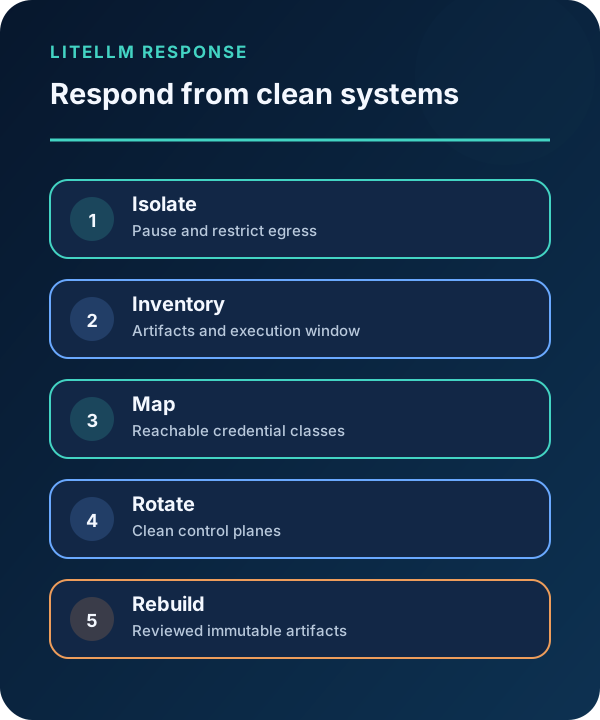
1. Isolate affected runtimes and preserve authoritative evidence
From a clean administrative workstation, identify every host, image, virtual environment, CI runner and developer environment that installed or pulled LiteLLM 1.107.0 or a floating tag during the relevant window. Pause affected workloads, restrict outbound access through approved controls and preserve package metadata, image digests, build provenance, process evidence and security logs according to the incident plan.
Do not start Python or pip inside a suspected environment merely to query its version. Use registry history, lockfiles, deployment manifests, software-composition records and offline filesystem inspection approved by the response lead. Do not execute payloads or contact attacker infrastructure.
The first artifact is an exposure register with immutable asset ID, owner, environment, observed artifact, evidence source, collection time, containment state and analyst confidence. Keep the unmodified exports beside the working copy.

2. Let AI map exposure claims to evidence—not secrets
Provide an enterprise-approved assistant only sanitized metadata. Suggested prompt: “Using only these package, image, deployment and identity exports, produce a table of affected or possibly affected assets. For each row cite the source record, observed version or digest, execution window, credential categories reachable by that runtime and missing evidence. Separate observations from hypotheses. Never reproduce secret values or label an asset clean.”
Have an analyst compare every row to the source. An assistant can confuse a build-time dependency with a deployed runtime, a mutable tag with a digest or an environment-variable name with proof that its value was read. Record contradictions explicitly.
Expected output: an evidence-linked asset-to-credential-class map and an unknown queue. This is a coordination artifact, not forensic proof of exfiltration.
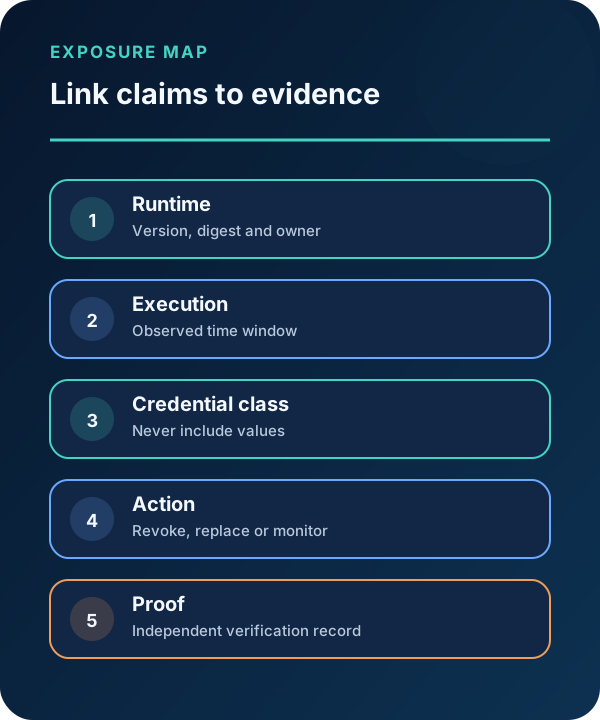
3. Rotate in risk-based waves from clean control planes
Prioritize credentials that were reachable from confirmed affected runtimes and can modify infrastructure, publish software, mint sessions or access production data. Revoke active sessions where the platform supports it, issue replacements from a clean system and update dependent workloads through normal secret-management channels.
A useful rotation sheet names the credential class, owning team, affected service, revocation method, dependency order, rollback plan and verification signal. AI can sequence prerequisites and flag missing owners, but identity, cloud and application owners approve and perform each action.
Do not rotate only API keys. Review cloud sessions, workload identities, registry and CI tokens, SSH material, database credentials and developer-tool sessions that the affected process could reach. The actual list must be evidence-based for your environment.

4. Rebuild cleanly and close only on new evidence
Rebuild affected systems from reviewed base images and lockfiles. Use an explicitly approved LiteLLM release and pin immutable container digests where possible; do not reuse the suspected virtual environment, image layer or cached package artifact. Validate the artifact source and build inputs before redeployment.
Suggested closeout prompt: “Compare the before-and-after register by immutable asset ID. List contained assets, rebuilt artifacts, rotated credential classes, revoked sessions, missing post-change observations and unresolved contradictions. Mark complete only when each claim has a cited verification record.”
Recovery evidence should include the deployed digest or package record, fresh credential issue and revocation events, service health, expected authentication behavior and follow-up monitoring. Keep root-cause conclusions provisional until maintainers publish confirmed findings.
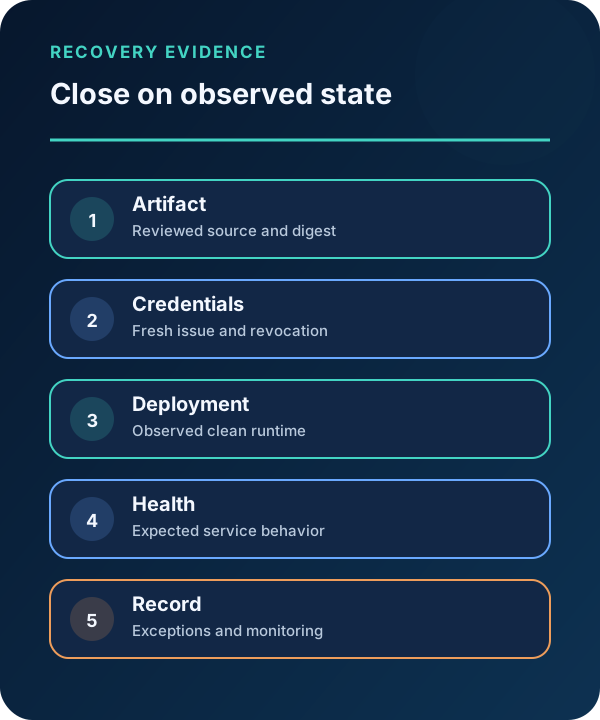
Response checklist and realistic limits
AI is useful for reconciling many owners and evidence sources, but it cannot determine what was installed on an unobserved system, prove a secret was not collected or replace malware analysis and incident leadership. Escalate according to legal, privacy, customer-notification and cyber-insurance obligations where applicable.
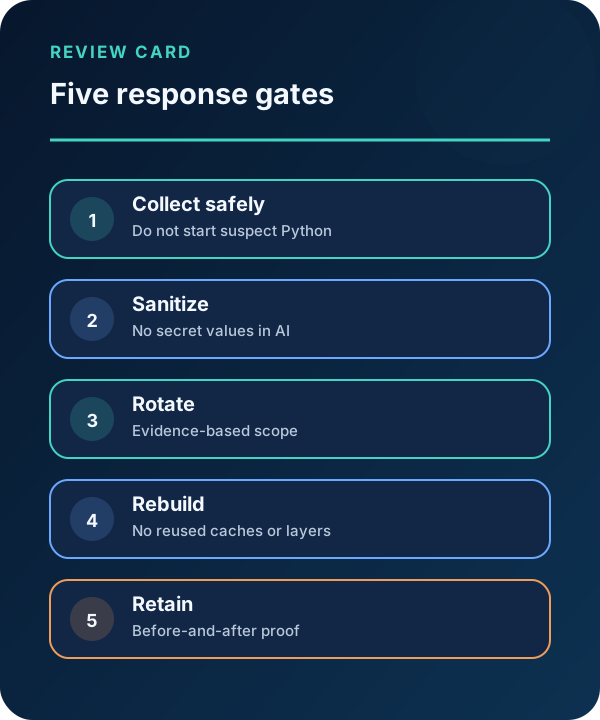
- Contain and collect from clean systems before running package commands.
- Rotate credential classes and sessions that evidence shows were reachable.
- Rebuild from reviewed artifacts and retain before-and-after verification.
Put the insight into practice.
Deep Security helps organizations assess risk, validate controls, and build a practical plan to strengthen their defenses.
Talk with Deep Security