

A practical workflow for mapping policies, control evidence, supplier dependencies and incident lessons into a cited cyber-resilience review and tabletop packet.
Why resilience evidence has current attention
On November 19, the Bank of England, Prudential Regulation Authority and Financial Conduct Authority published effective practices for cyber risk and resilience relating to AI alongside broader resilience guidance. The material is aimed at UK financial-services firms and describes practices rather than creating a universal rule for every organization.
Same-day legal and news coverage emphasized board accountability, identity and access, data, third parties, detection, response, lessons learned and the ability to withstand, contain and recover. The Independent reported that the AI and quantum material was additional and not itself part of the formal consultation; HSF Kramer said the proposals do not create new rules. For Deep Security readers outside UK financial services, those themes are useful inputs for a voluntary evidence review, not a claim of regulatory applicability.

Set a defensible scope
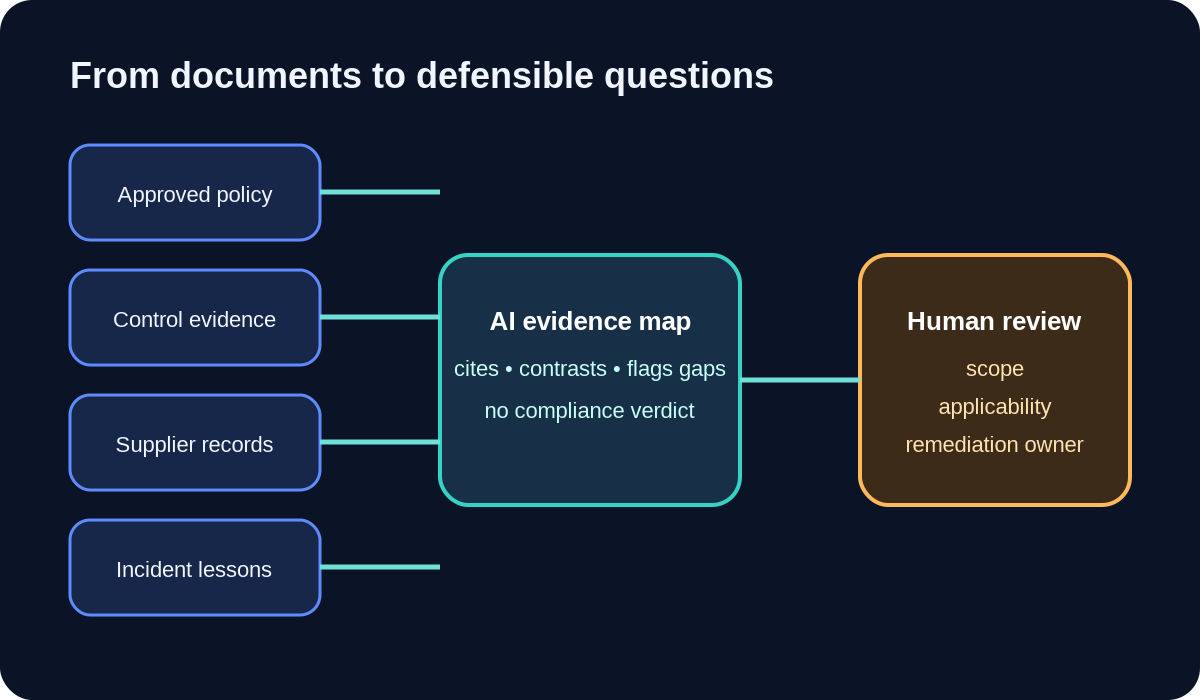
This workflow fits CISOs, risk owners, IT administrators, service owners and third-party risk teams preparing an internal review or tabletop. Start with one critical service and an approved evidence set: policy, architecture, identity reviews, data classification, supplier register, backup and restore tests, detection playbooks, incident lessons and open remediation tickets.
Remove customer records, credentials, secrets and unnecessary personal data before model access. Use an enterprise-approved model with retention and access controls appropriate to the material. The model may classify and cite evidence; it must not decide legal applicability, control effectiveness or risk acceptance.
Step 1: build the evidence matrix
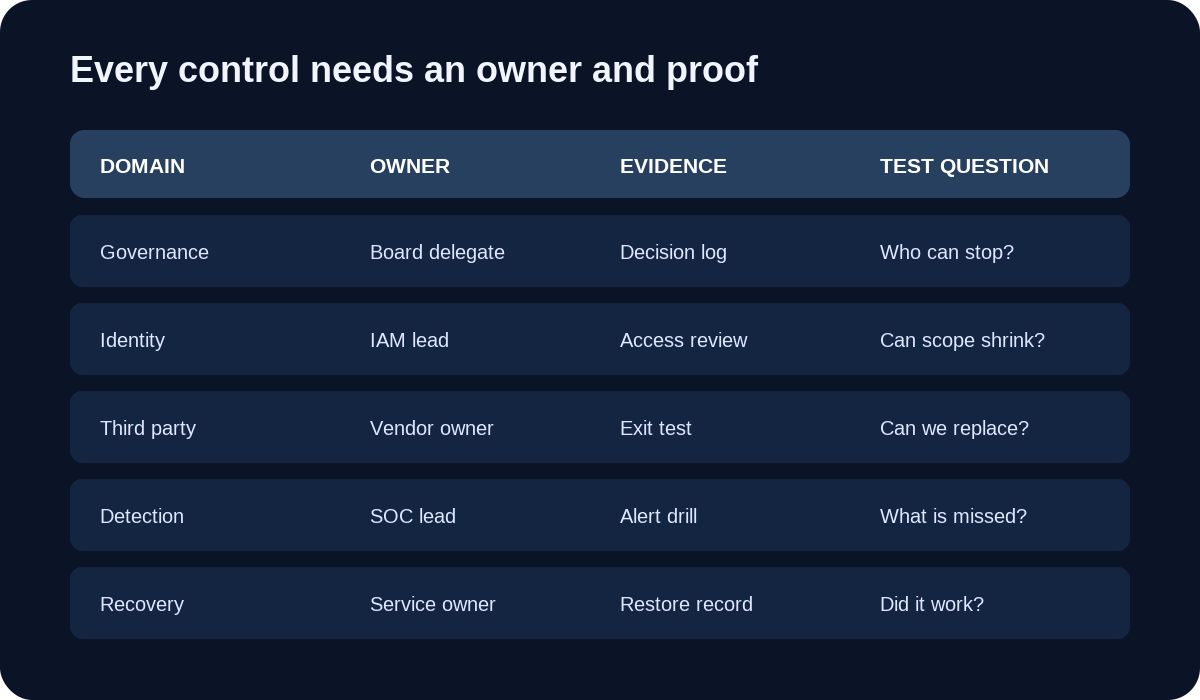
Create rows for governance, critical infrastructure, identity, data, third parties, detection and response, lessons learned and recovery. For every row, require an owner, exact evidence link, evidence date, current test, exception and next review. Keep a separate applicability field so a reviewer can explain why a practice is relevant, partially relevant or out of scope.
Example prompt: “Using only evidence bundle CR-20, map each source to the listed resilience domains. Quote no more than a short identifying phrase; otherwise summarize. Cite document ID and section, distinguish documented design from tested operation, list missing or stale evidence, and output questions for the named owner. Do not grade compliance or invent a control.”
Step 2: turn one gap into a tabletop
Choose a gap with business consequence—for example, a critical AI-enabled supplier becomes unavailable while privileged credentials tied to its integration may be exposed. Ask the model to draft a timed sequence of injects using only the architecture and supplier facts in the approved bundle. A facilitator reviews every inject before the exercise.
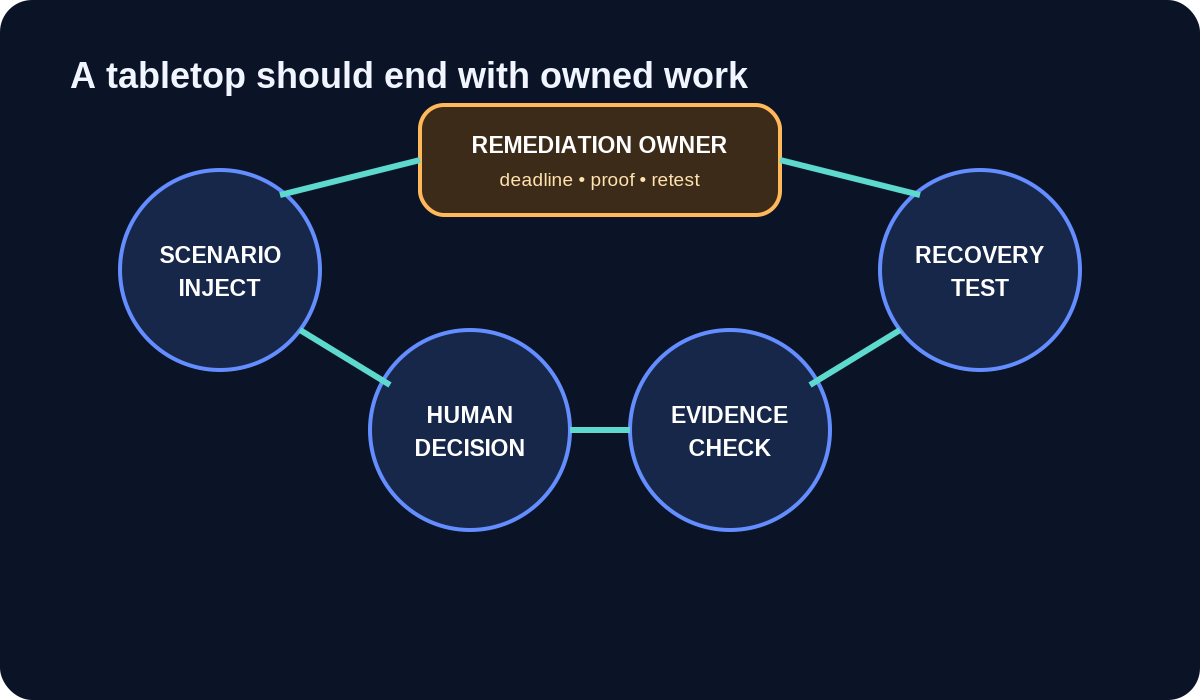
Expected output includes scenario assumptions, participants, decision points, evidence requested, communications, recovery criteria and unresolved dependencies. During the session, people make decisions. The model may summarize the record afterward, but it should not score participants.

Step 3: convert lessons into owned retests
For each failed assumption or missing artifact, assign an accountable owner, deadline, proof required and retest date. Example follow-up prompt: “Convert facilitator-approved findings into remediation tickets with source links, impacted service, owner, smallest safe change, validation evidence and retest. Preserve disputed findings as disputed; do not close or accept risk.”
Track evidence freshness, unowned dependencies, restore-test success, overdue actions and corrections made by reviewers. Do not optimize for a model-generated maturity score.
Limitations and selection signal
A model cannot verify that an undocumented control operates, that a supplier can recover or that a board understood a risk. Source bundles can be incomplete, policy language can be mistaken for operating evidence and regulatory context can be misapplied across jurisdictions. Keep legal and regulatory interpretation with qualified people and test important claims in the real environment.
A focused Firecrawl search on November 20 returned the November 19 primary publication and news release prominently, plus several same-day independent legal and news reports. That cluster establishes fresh attention and a direct resilience use case for cybersecurity and managed-IT readers. Search placement is not evidence of traffic, rankings or universal regulatory scope.
Put the insight into practice.
Deep Security helps organizations assess risk, validate controls, and build a practical plan to strengthen their defenses.
Talk with Deep Security