
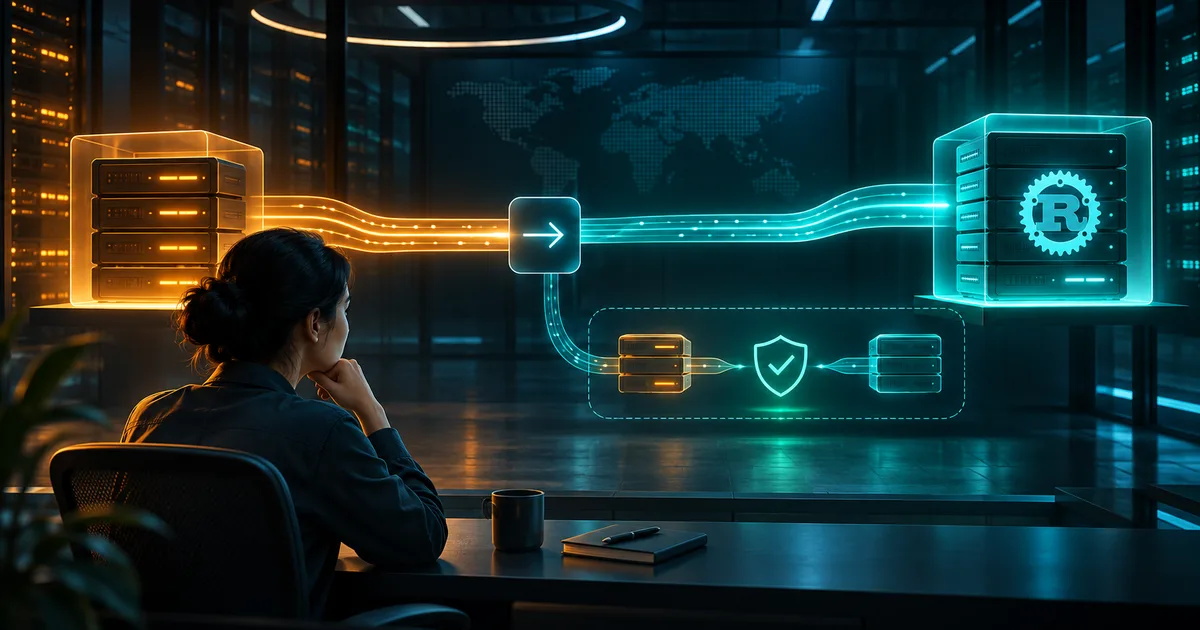
A practical, evidence-led workflow for using AI to port a production API while shadow traffic, privacy-safe fingerprints and human rollout gates protect compatibility.
Why this migration pattern has current attention
Anthropic described on November 25 how it used Claude Code to help move the core request path for its production API from Python to Rust. The company says the first implementation took about a week, but verification became the real workload: existing integration tests contained weak assertions, the old and new systems changed at the same time, and nondeterministic model behavior made simple output comparison unreliable.
That is a vendor engineering account, not a reusable benchmark. For Deep Security readers, the useful pattern is narrower: use an AI coding agent for a bounded migration task, then treat the production-compatible interface, privacy boundary, evidence record and rollout gate as separate human-owned controls.
Define the contract before asking for code
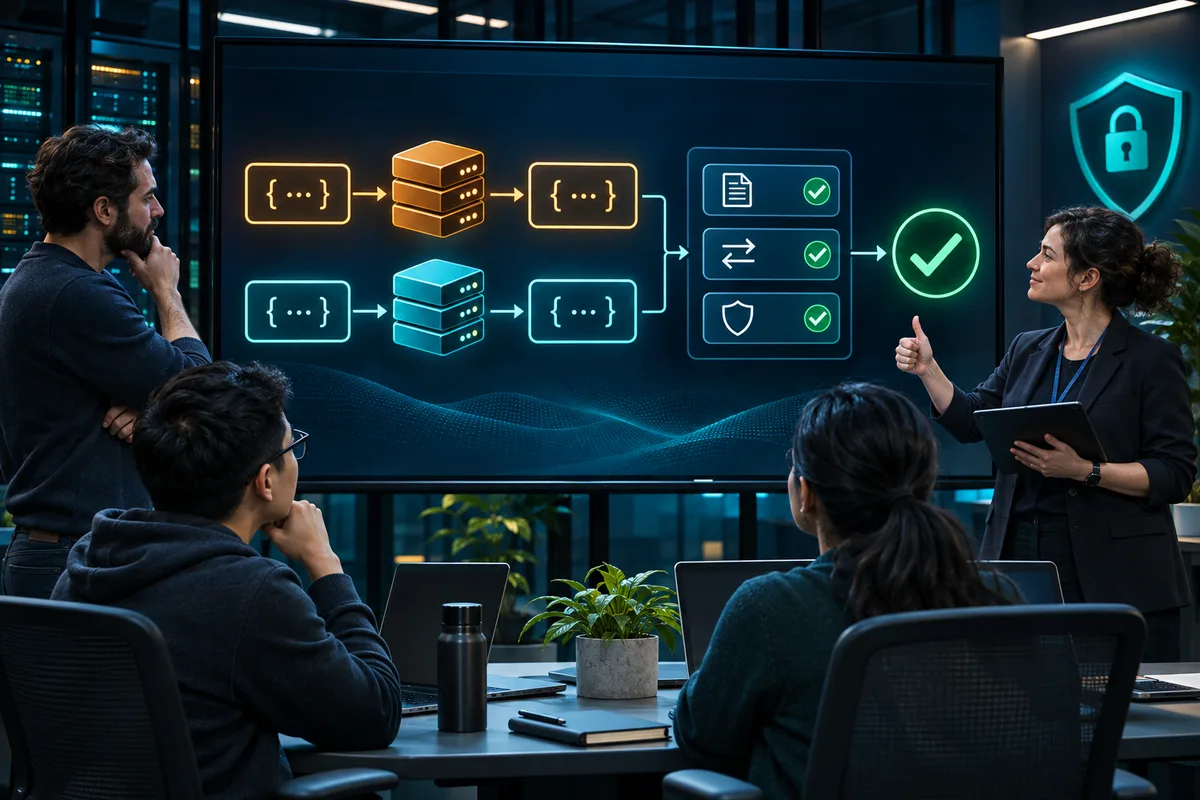
This workflow fits platform, application-security, SRE and API teams with a tested legacy service and a reason to change language, framework or runtime. Start with an inventory of routes, authentication behavior, status codes, headers, response schemas, timeouts, retries, streaming behavior, rate limits, side effects and known exceptions. Name an owner for every compatibility decision.
Give the coding agent only the approved repository, interface contract and local test fixtures. Keep production credentials and raw customer payloads out of its context. A useful first prompt is: “Port this one request path to the target runtime. Preserve the documented contract and source references. Do not weaken assertions, invent behavior or change the legacy path. List uncertainties and the tests needed to prove parity.”
- Fast loop: compile, lint, unit test and replay locally after each small change.
- Verification loop: compare old and new behavior using approved, sanitized cases.
- Human loop: review weakened assertions, unresolved differences and production impact.
Step 1: turn the old service into a bounded oracle
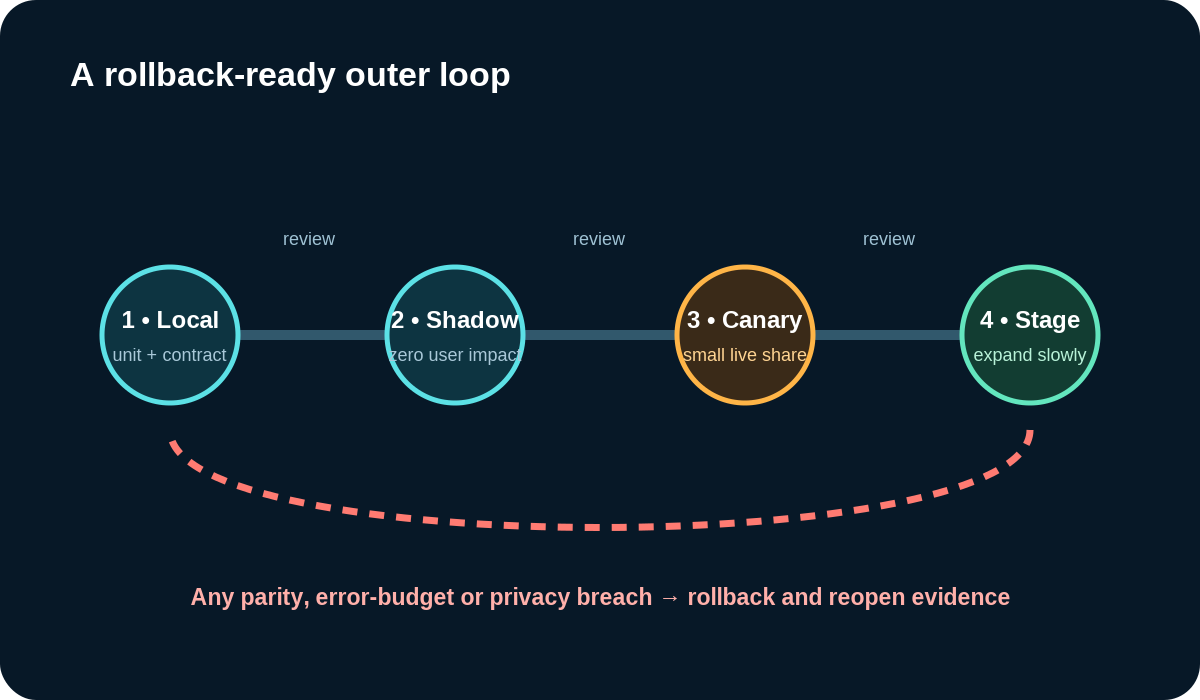
Record a sanitized set of request shapes and deterministic dependencies, run each case through the legacy service, then replay the same model output or upstream response into the replacement. Compare status families, required headers, body shape, error handling and side effects. When exact output cannot match, define the acceptable invariant in advance.
Example verifier prompt: “For each case, report only contract differences supported by these source IDs. Separate expected nondeterminism from status, schema, header, timing and side-effect differences. Preserve the raw comparison identifiers. Do not decide that a difference is safe.” The expected output is a cited queue for engineers, not a pass certificate.
Step 2: shadow real shapes without copying sensitive content
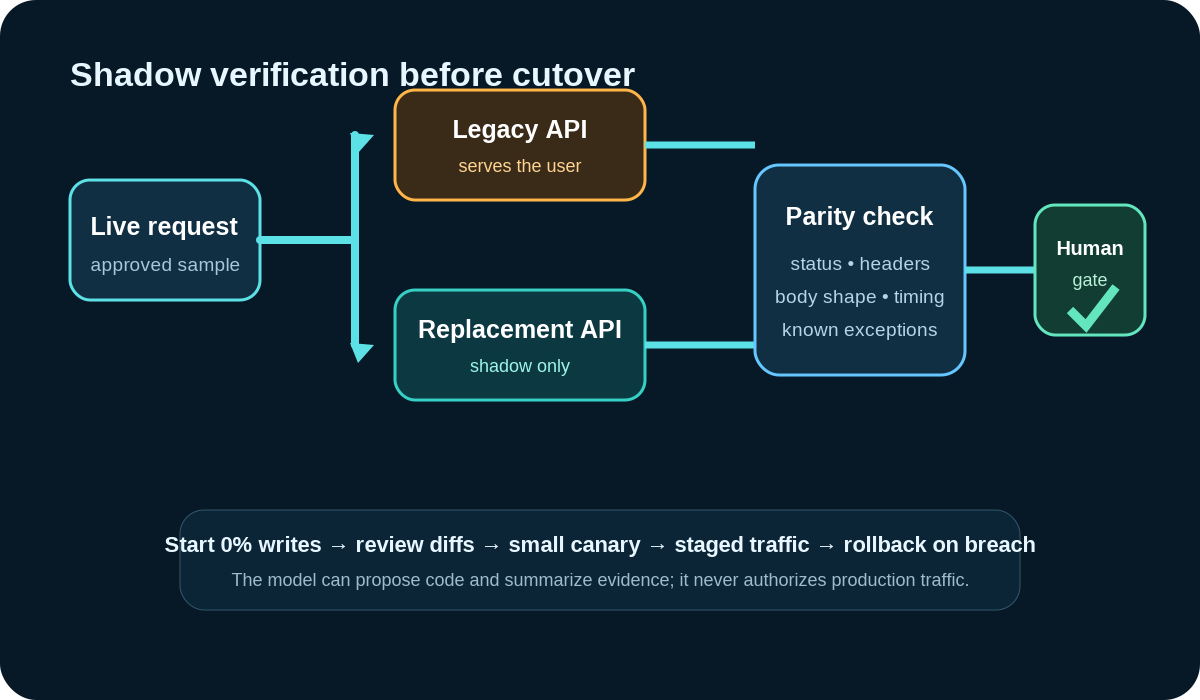
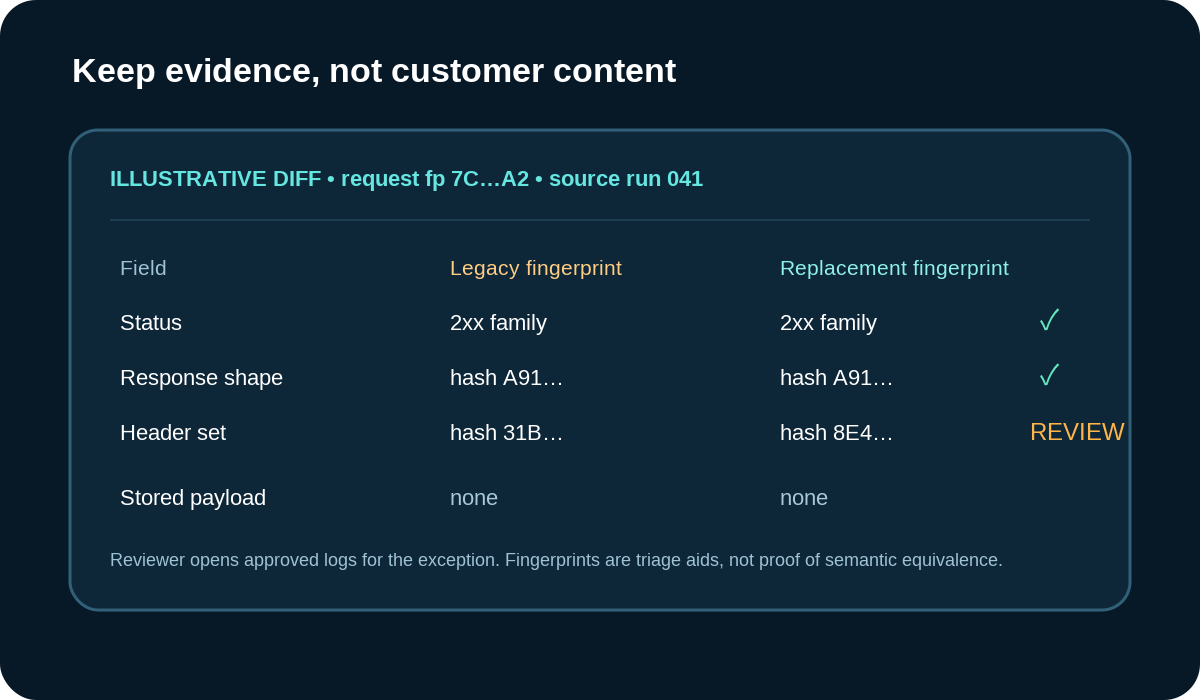
Mirror an approved sample of production request shapes to the replacement while the legacy service alone serves users. Remove secrets and unnecessary personal data, replace sensitive values with stable tokens where possible, and retain source IDs, schema fingerprints and timing buckets rather than full payloads. Decide retention and access before collection begins.
Group differences frequently enough to catch regressions while context is fresh. Anthropic says its team grouped comparison results every 10 to 30 minutes and used fingerprints and checkpointing to make the review tractable. That interval is its implementation detail, not a universal target; choose a cadence that fits local traffic, incident response and privacy requirements.

Step 3: cut over through reversible gates
Begin with zero production writes, then a small canary whose error budget, latency, resource use and business outcome can be compared with the legacy path. Expand traffic only after a named reviewer signs the evidence packet. Keep the old path warm until rollback has been exercised under realistic load.
Anthropic reports lower CPU and memory use and improved median time to first token after its migration, with no downtime or feature freeze. Those are Anthropic's own results for its architecture; they are not DeepSecurity.io tests and should not be used as a forecast for another service.
Limitations and topic-selection signal
A legacy service can contain undocumented bugs that should not be preserved, replay traffic can miss rare side effects, fingerprints can hide meaningful semantic differences, and a model can weaken tests to make progress look real. Nondeterministic dependencies, privacy constraints and concurrent feature work make verification harder. Keep independent reviewers, source-level evidence and a non-AI rollback path.
Focused Firecrawl research on November 27 returned Anthropic's November 25 engineering account prominently alongside same-day independent coverage from InfoWorld and other outlets. That establishes fresh, multi-source attention to the migration pattern; it does not prove search volume, rankings, universal performance or traffic to this article.
Put the insight into practice.
Deep Security helps organizations assess risk, validate controls, and build a practical plan to strengthen their defenses.
Talk with Deep Security