
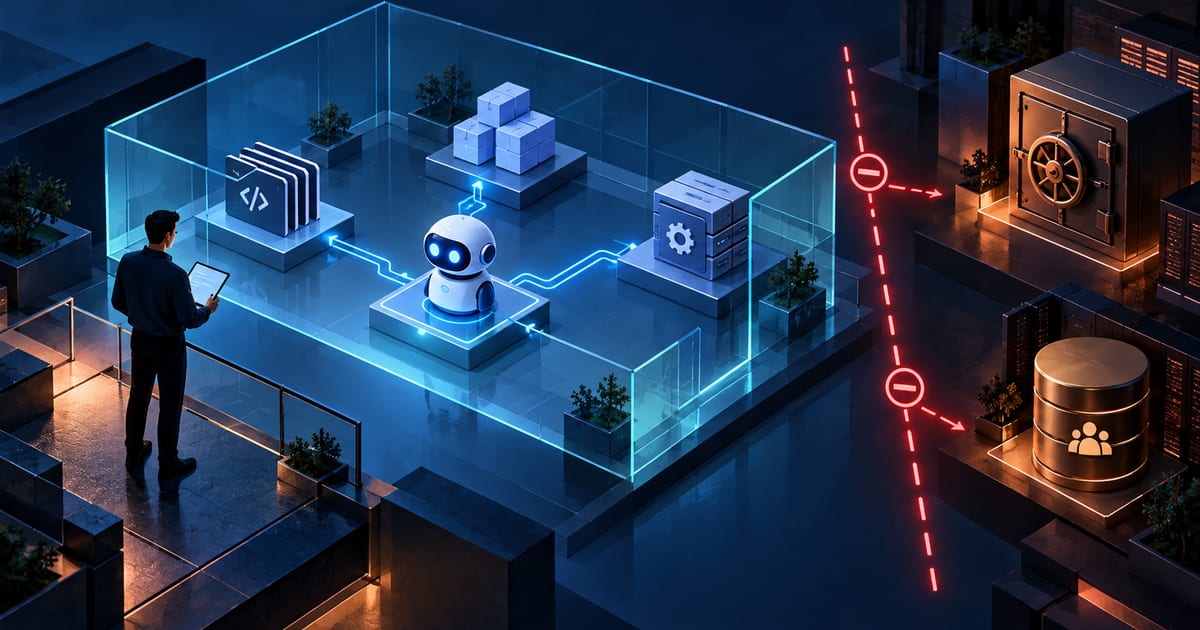
Evaluate NVIDIA’s new OpenShell reference architecture in a bounded pilot. Map runtime, host and out-of-band controls; test failures; and preserve decision evidence.
What NVIDIA announced on October 21
NVIDIA announced the OpenShell Reference Architecture for AI-agent security on October 21, 2026. The company says the design combines the open-source OpenShell runtime with Vera Rubin infrastructure, Vera CPUs, BlueField-4 DPUs and NVIDIA Sentry for monitoring and in-silicon policy enforcement. It also describes support paths for Canonical, Red Hat and Windows environments, including Microsoft Execution Containers.
NVIDIA’s documentation presents a layered secure-agent workspace and says the architecture can extend to systems such as RTX Spark, DGX Spark and DGX Station. “Available” here means the reference architecture and documentation are published; it does not establish that every named component, platform integration or commercial configuration is immediately available to every buyer. Confirm hardware, software, support and pricing with the relevant vendor.
Focused Firecrawl searches on October 22 placed the NVIDIA announcement first and found same-day or next-day coverage from several technology publishers, including TechTimes. That is evidence of current public attention, not independent validation of isolation claims, deployment speed or demand.
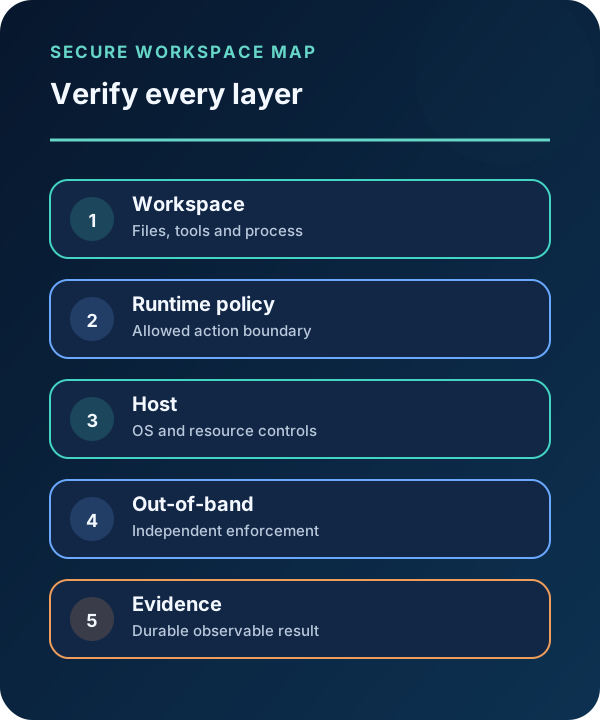
1. Decide whether the architecture fits your threat model
Start with one agent that needs tools or data beyond a chat window: for example, a coding agent that can clone a synthetic repository, run tests and propose a pull request. List the assets to protect, untrusted inputs, allowed network destinations, permitted file paths, secrets boundary and actions that require approval.
Record the target platform, because a reference design spanning Vera Rubin, BlueField-4 and workstation-class systems may have materially different enforcement paths. Document which controls are hardware-backed, runtime-enforced, host-enforced or merely operational procedure.
The first output is a requirements-to-control matrix with an owner and verification method for every claim. If a control has no observable test, mark it unverified.

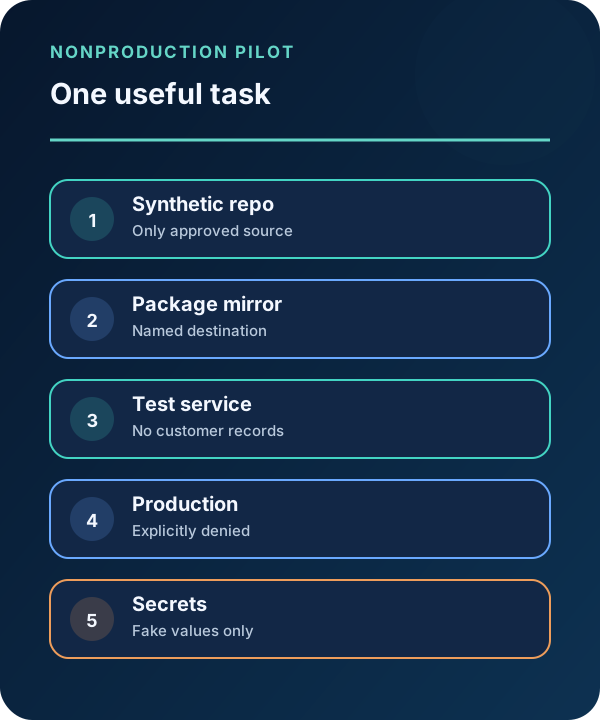
2. Build the smallest nonproduction pilot
Use synthetic code, fake credentials and a disposable environment. Pin the OpenShell runtime and policy configuration to reviewed versions. Allow only the repository, package mirror and test service required for the workflow; deny every other network and filesystem target. Keep production source, customer data and deployment keys out of scope.
Suggested design-review prompt for an approved assistant: “Map these stated agent actions to runtime, host, network and out-of-band controls. Cite the supplied architecture section for each mapping, label vendor claims as claims, and mark any missing enforcement or verification path unknown. Do not assume a control is hardware-backed.”
Have security and platform owners review the mapping. The expected result is a reproducible pilot manifest and test plan, not a general statement that the agent is isolated.
3. Test denials and out-of-band evidence
Exercise both the happy path and failures: read outside the workspace, connect to an unapproved destination, request a secret, alter a policy file, exhaust a resource limit and continue after runtime pause. For each test, record the layer that denied the action, the event emitted and the independent system that observed it.
Out-of-band monitoring is valuable only if the agent or compromised host cannot quietly suppress it. Verify the log path, time source, identity, retention and access control. Then simulate loss of that monitoring path and document whether the workspace fails closed, alerts, degrades or continues.
Do not publish a benchmark from a handful of lab runs. Measure policy-denial correctness, missing events, operator recovery and workload impact in your own environment.

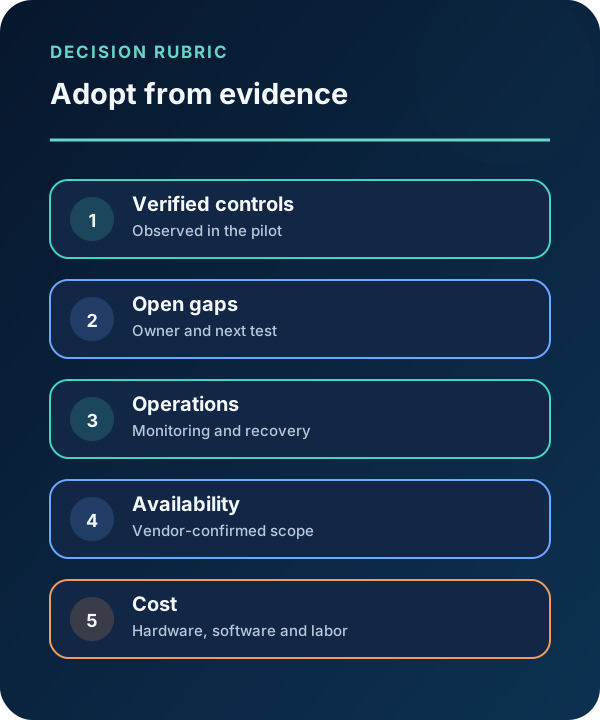
4. Make an evidence-based adoption decision
Compare the pilot with existing container, virtual-machine, endpoint, network and identity controls. Note which OpenShell layers reduce a real gap, which duplicate established controls and which require new hardware or operational expertise. Include supply-chain maintenance, policy review, alert ownership and recovery procedures.
Use three outcomes: proceed to a larger pilot, hold for missing capability or reject for this workload. Attach the control matrix, tested versions, policy files, results, exceptions, estimated operating cost and vendor availability confirmations.
A reference architecture is useful for composition, but responsibility remains shared across NVIDIA, operating-system and platform partners, the agent framework, the model provider and the operator.
Who should evaluate it—and who should wait
Enterprise platform and security teams building high-authority agent workspaces are the clearest audience. Teams running read-only assistants may gain more by improving identity, logging and approval controls first. Organizations without the named hardware stack can still use the architecture as a question set, but should not assume equivalent enforcement.
- Map each claim to an enforcement layer and observable test.
- Pilot with synthetic work and explicit deny cases.
- Verify component availability, licensing, support and operational cost before rollout.
Put the insight into practice.
Deep Security helps organizations assess risk, validate controls, and build a practical plan to strengthen their defenses.
Talk with Deep Security