

Correlate identity, network and backup-enumeration signals into a cited ransomware reconnaissance case without letting an AI assistant contain systems.
What the Aur0ra reporting changes for defenders
Sophos reported on October 29 that the GOLD OGRE group used agentic coding tools and multiple AI models during Aur0ra ransomware operations. Its researchers described human operators supplying access and objectives while agents performed network and Active Directory discovery, analyzed credential-based attack paths, moved laterally and searched backup repositories, NAS, virtualization and cloud-connected storage.
Independent coverage from CyPro on October 29 and Compare the Cloud on October 30 treated the report as evidence of AI supporting live operational activity rather than only generating malware. A focused Firecrawl search on October 31 returned the Sophos analysis first and multiple independent follow-ups. That is a freshness and coverage signal, not proof that these indicators are unique, universal or effective in every environment.
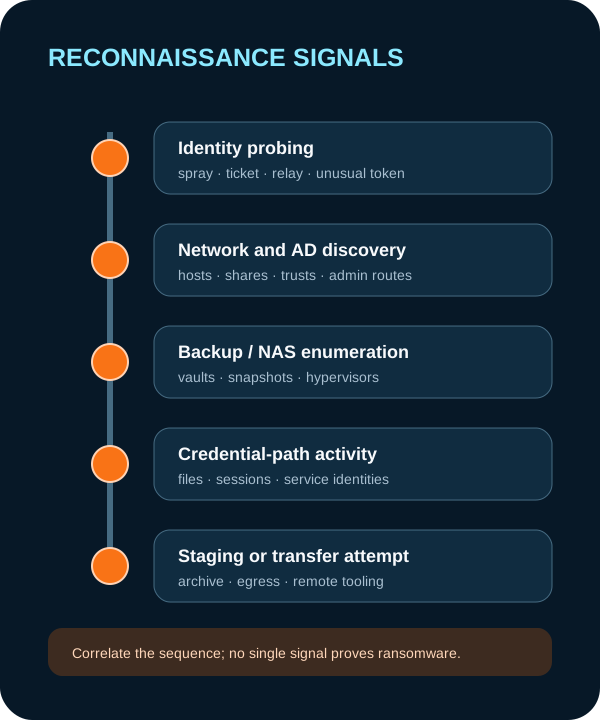
The defensive use case is to correlate the same progression across your own telemetry. The model should help order evidence; it should never run commands, isolate hosts or change recovery systems.
1. Build a recovery-asset and identity map first
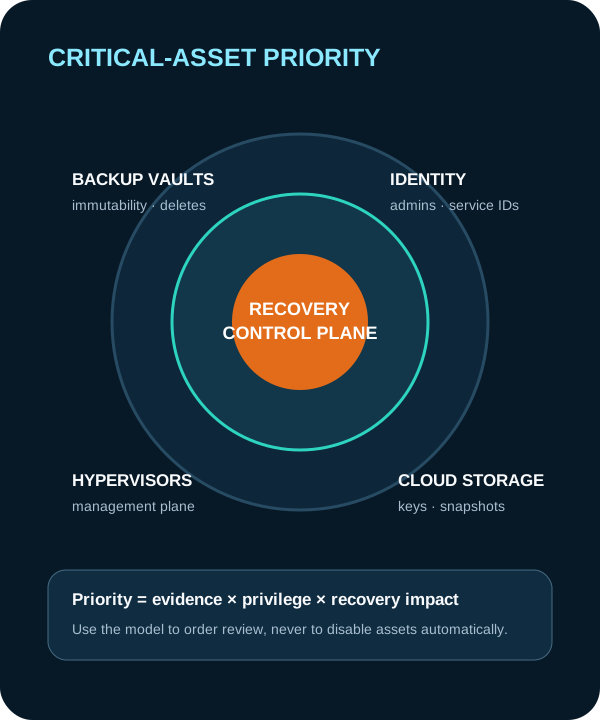
Inventory backup consoles, repositories, immutable tiers, NAS, hypervisors, directory services, privileged-access systems and cloud snapshot accounts. Record management paths, service identities, deletion privileges, logging sources, recovery owners and the last verified restore.
The point is not to feed full configuration dumps into a model. Export only the minimum approved fields needed to connect assets, identities and observations. Preserve raw logs separately with hashes and retention controls.
Rank assets by evidence of probing, privilege reachable from the observed identity and business recovery impact. Unknown ownership or missing telemetry should raise review priority rather than become a guessed relationship.

- Include backup management planes and service identities, not only repositories.
- Separate restore capability from the account that can delete or reconfigure it.
- Record the source and collection time for every relationship.
2. Ask the model for a cited sequence and alternatives
Supply sanitized identity events, directory queries, endpoint detections, backup-console audit logs, storage access, network flows and approved threat intelligence. Normalize timestamps and retain evidence IDs so every inference can point back to a source record.
Example prompt: 'Using evidence set RR-31, build the shortest supported sequence linking identity probing, directory or network discovery, backup or NAS enumeration, credential-path activity and staging. Cite evidence IDs for every edge. Provide at least two benign alternatives, list missing telemetry and recommend the next read-only query. Do not execute queries or propose automatic containment.'
Reviewers should reject edges based only on proximity or a tool name. Administrative inventory, patching, backup tests and disaster-recovery exercises can create similar events.
3. Convert the hunt into a human response queue
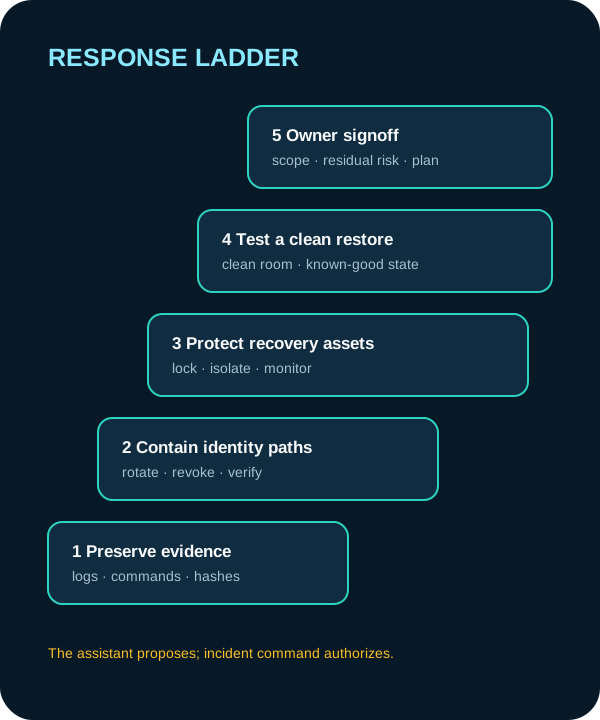
Incident command should decide whether to preserve, isolate, revoke, rotate or monitor. Protect recovery assets from the suspected identity path, verify immutability and separate clean-room restore credentials from the production directory.
For identity signals, revoke confirmed malicious sessions, rotate affected secrets and test that old credentials no longer work. For backups, confirm deletion protections, offline or logically isolated copies, monitoring and a known-good restore point before making disruptive changes.
DeepSecurity.io did not reproduce the Sophos observations or test an AI model against Aur0ra data. Vendor-reported indicators should be validated against current, authorized sources before operational use.

4. Exercise the sequence without touching production
Create synthetic events for an approved backup inventory, a benign administrator, a fake password spray, a backup-enumeration query and a staging alert. Confirm that the assistant cites evidence, produces alternatives and stops at a review queue.
Measure missing citations, false connections, reviewer corrections and time to produce a usable evidence packet. Do not claim an accuracy rate until the local test set, scoring method and reviewers are documented.
Close the exercise with verified telemetry gaps, owners, credential-path fixes, backup-control tests and a clean restore result.
Put the insight into practice.
Deep Security helps organizations assess risk, validate controls, and build a practical plan to strengthen their defenses.
Talk with Deep Security